Cost to Upgrade Electrical Panel: Essential Information for Homeowners
Understanding the Cost to Upgrade Electrical Panel: A Practical Guide
Key Takeaways
- Electrical panel upgrades typically cost $1,300 to $3,000 for a standard 100-amp to 200-amp upgrade, including labor and materials
- Panel costs range from $100 for basic 100-amp units to $500+ for 400-amp smart panels, with installation labor adding $800 to $2,500
- 200-amp service is the modern standard for homes built since 2015, supporting increased electrical demands from appliances and EV chargers
- Professional installation by licensed electrician is required for safety and code compliance, as DIY electrical work can cause fires and code violations
- Total project costs can reach $6,000+ when factoring in panel relocation, meter box replacement, or extensive rewiring requirements
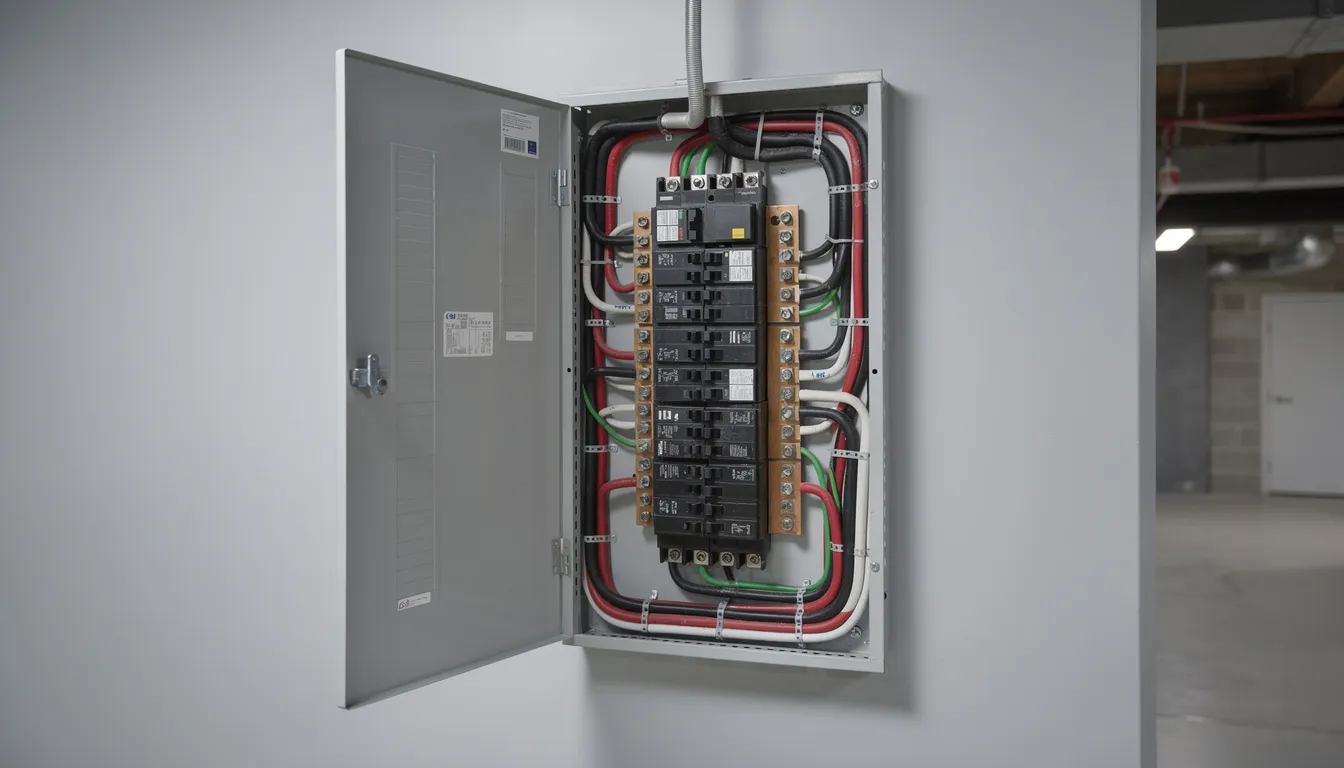
Your home’s electrical panel serves as the central hub of your electrical system, distributing power safely throughout your house. When this critical component becomes outdated or insufficient for your electrical needs, upgrading becomes essential. Understanding the cost to upgrade electrical panel helps you budget effectively while ensuring your home meets modern electrical demands and safety standards.
Most homeowners discover they need panel upgrades when installing new appliances like heat pump systems, electric vehicle chargers, or additional circuits for home renovations. The existing panel in older homes often lacks the capacity to handle today’s electrical load requirements, making upgrades both a safety necessity and a practical investment.
Electrical Panel Upgrade Cost Overview
The cost to upgrade your electrical panel varies significantly based on several factors, but here are the typical ranges for common upgrade scenarios:
- 100-amp upgrade: $800-$1,500 total project cost
- 200-amp upgrade: $1,300-$3,000 total project cost
- 300-amp upgrade: $1,800-$3,500 total project cost
- 400-amp upgrade: $2,000-$6,000 total project cost
These electrical panel upgrade costs include both the panel hardware ($100-$500+) and professional installation labor ($800-$2,500). The wide cost ranges reflect differences in local labor costs, existing wiring conditions, and project complexity.
Most panel upgrade projects require 4-8 hours of work by a licensed electrician, though complex installations involving panel relocation or extensive rewiring can extend to 1-2 days. Electrical permits are typically required and cost $50-$300 depending on local regulations.
Modern electrical panels are built to last 25-40 years before requiring replacement or upgrade, making this a long-term investment in your home’s electrical infrastructure.
Factors That Affect Electrical Panel Upgrade Costs
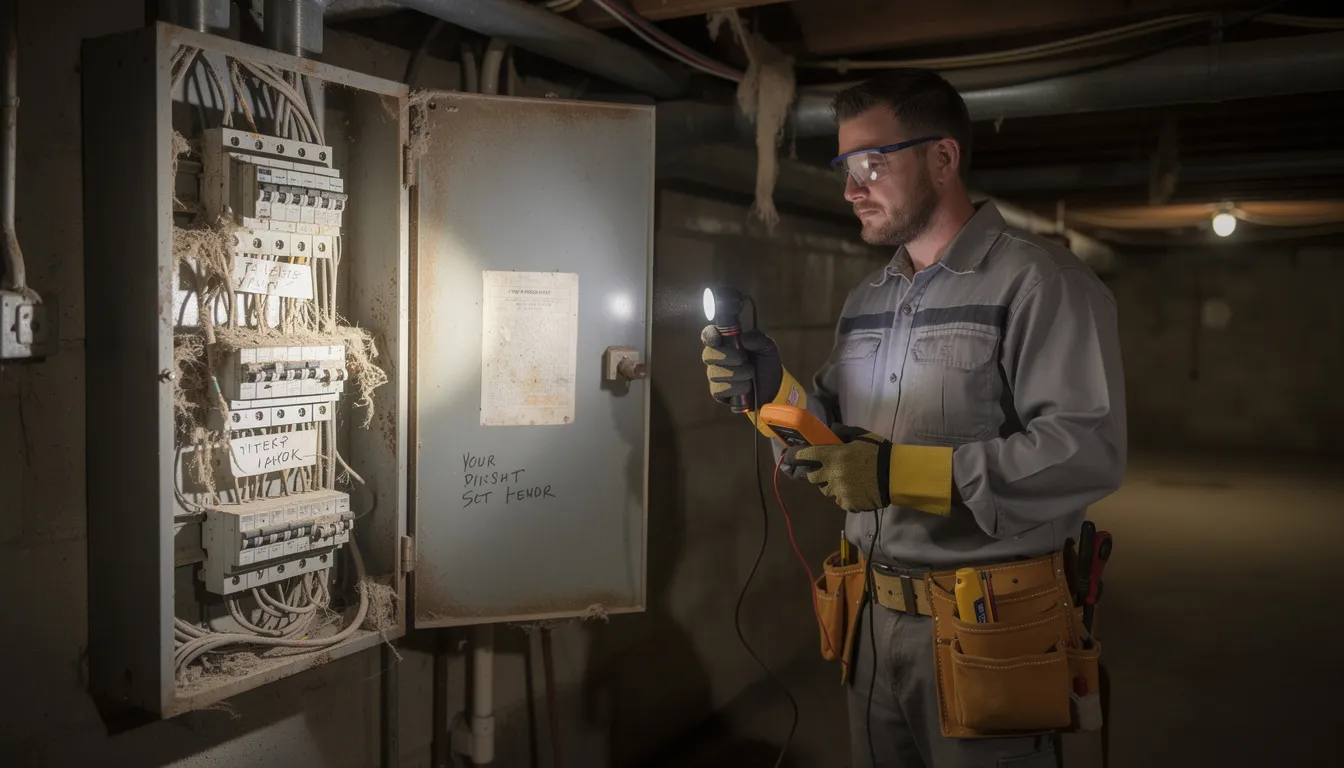
Several key factors determine your final panel upgrade cost, and understanding these variables helps you anticipate potential expenses:
Panel amperage rating represents the most significant cost driver. Higher amperage panels (200, 300, 400 amps) require larger conductors, more robust hardware, and often utility coordination, increasing both equipment and installation costs compared to basic 100-amp upgrades.
Existing electrical system age and condition can dramatically impact project scope. Older homes with cloth-insulated wiring, inadequate grounding, or obsolete components may require extensive rewiring to meet current electrical codes. These additional electrical work requirements can double or triple the base panel upgrade cost.
Panel location changes add substantial expense when current panels are located in prohibited areas like closets, bathrooms, or spaces with insufficient clearance. Relocating panels typically adds $1,000-$2,700 due to new branch circuit extensions and infrastructure requirements.
Meter box replacement needs arise when upgrading service amperage beyond the existing meter’s capacity. New meter boxes cost $100-$500 plus installation labor, and utility company coordination may extend project timelines.
Local labor rates vary widely depending on regional economics and electrician availability. Hourly rates typically range from $50-$120, with higher costs in urban markets and areas with strong union presence.
Permit requirements and inspection processes add both direct costs and potential delays. Some jurisdictions require multiple inspections or have specific code requirements that increase project complexity and associated labor costs.
Cost Breakdown by Panel Size
100-Amp Panel Upgrade Costs
For smaller homes with modest electrical needs, 100-amp panel upgrades offer an economical solution. Panel hardware alone costs $100-$200 for basic residential units, while complete installation including labor brings total project costs to $800-$1,500.
New 100-amp service installation, including service entrance conductors and meter connections, typically ranges from $1,200-$1,600. This amp panel size works best for homes under 1,500 square feet with standard appliances and minimal high-power equipment.
However, 100-amp service may limit future electrical additions like electric vehicle chargers or heat pump installations, potentially requiring upgrading your electrical panel again within a few years.
200-Amp Panel Upgrade Costs
The 200-amp panel represents today’s residential standard, with hardware costs ranging from $250-$350 for standard residential models. Complete installation projects typically cost $1,300-$3,000, making this the most popular upgrade choice for modern homes.
New 200-amp service installation, including all electrical service components, ranges from $1,800-$2,500. This capacity supports central air conditioning, electric dryers, multiple appliances, and future additions like EV chargers without straining the electrical system.
Most homes built since 2015 include 200-amp service as standard equipment, reflecting increased electrical demands from modern appliances and smart home technology.
300-Amp Panel Upgrade Costs
The 300-amp option serves as a middle ground for larger homes, with panel hardware costing $350-$500. Total installation costs range from $1,800-$3,500, though many homeowners skip this size in favor of 400-amp service for better future-proofing.
Complete 300-amp service installation ranges from $2,000-$4,500, including upgraded electrical service infrastructure. This capacity works well for homes with multiple HVAC systems or extensive workshop equipment but may still limit some high-demand applications.
400-Amp Panel Upgrade Costs
Large luxury homes and properties with extensive electrical demands typically require 400-amp service. Panel hardware costs start at $500+, with smart panel features adding significant expense. Installation labor brings total costs to $2,000-$4,000 for the panel upgrade alone.
Complete new 400-amp service installation ranges from $4,000-$6,000, including all electrical infrastructure upgrades. This capacity supports multiple heat pump systems, extensive workshop equipment, EV charging stations, and substantial future electrical additions.
Utility company coordination becomes more complex with 400-amp service, as not all residential areas have transformer capacity to support such high electrical loads.
When You Need an Electrical Panel Upgrade
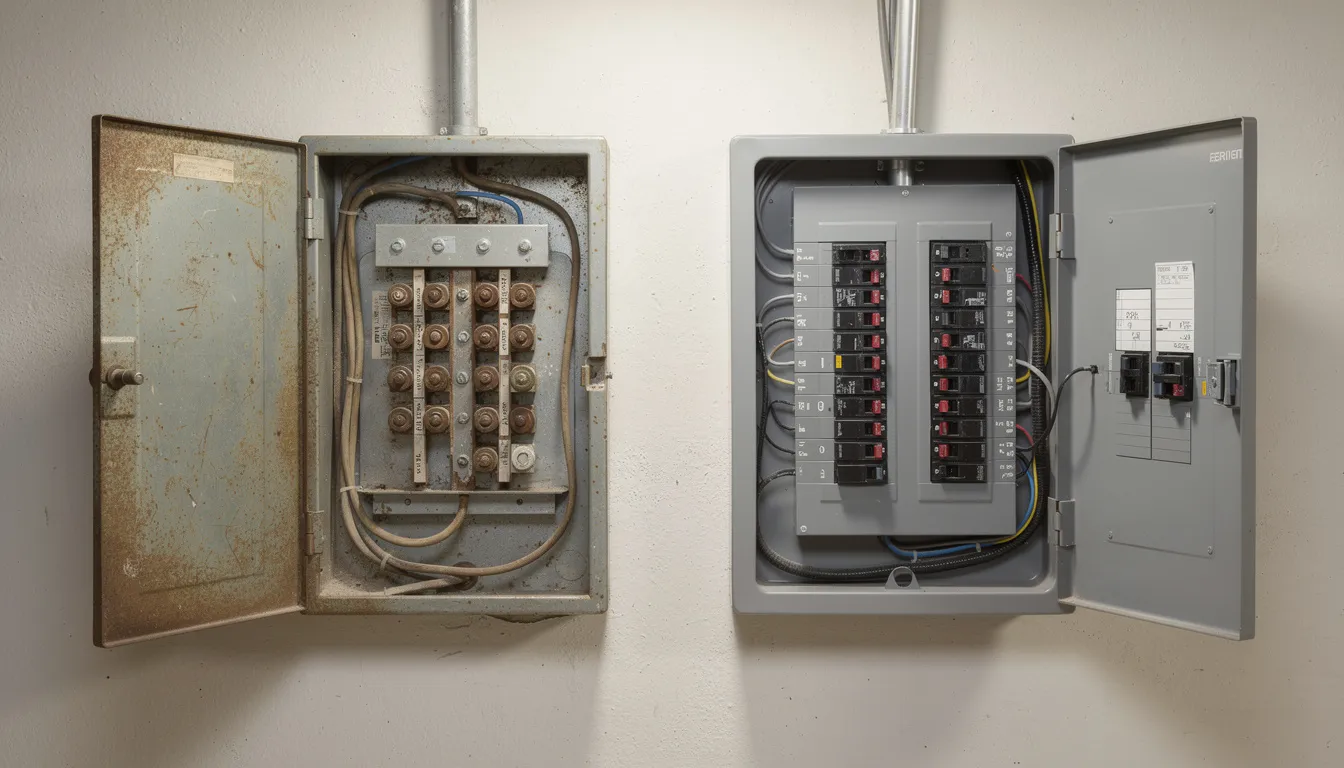
Several clear indicators signal when your current panel requires upgrading to maintain safety and meet electrical needs:
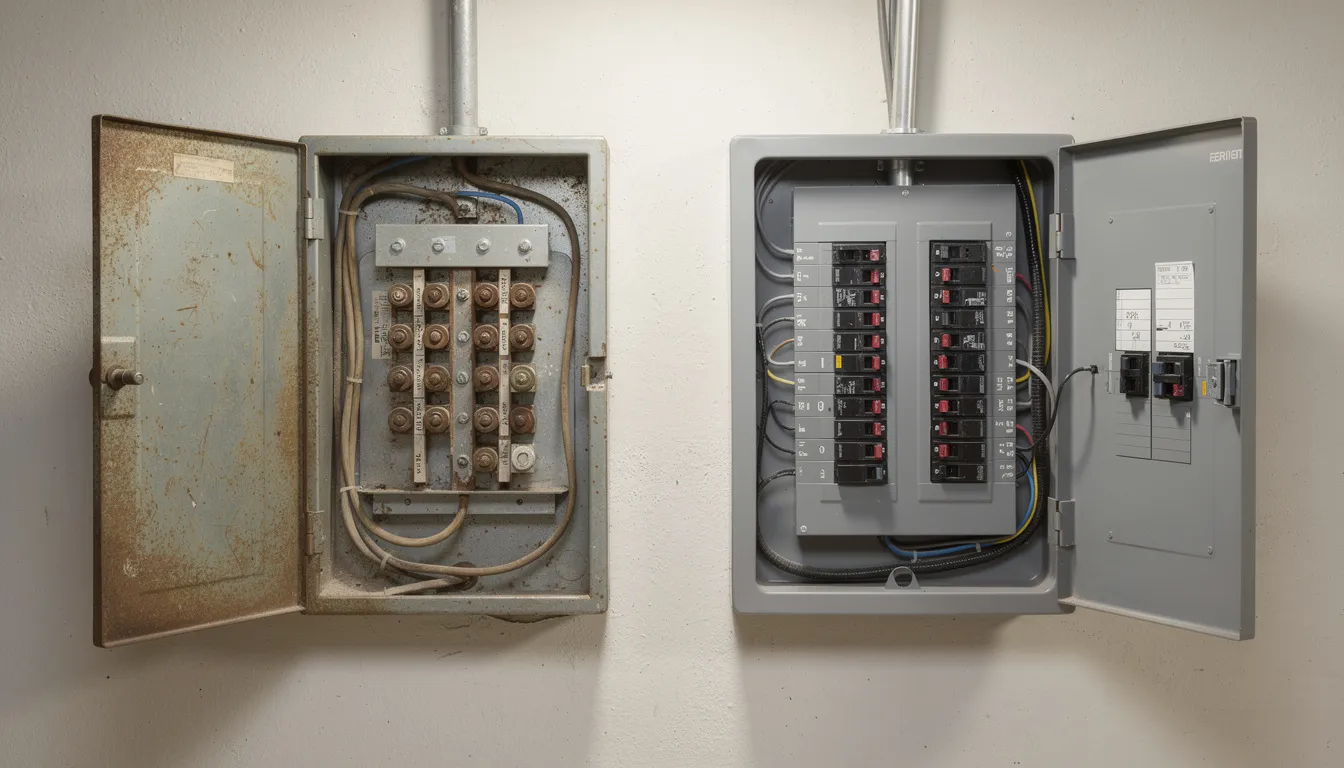
Age-related factors top the list of upgrade triggers. Electrical panels over 25-40 years old should be evaluated for replacement, especially those manufactured by Federal Pacific or Zinsco, which have documented safety issues and may not trip properly during overload conditions.
Performance issues manifest as frequent circuit breaker trips, flickering lights when major appliances start, burning smells near the breaker box, or warm panel surfaces. These symptoms often indicate overloaded circuits or failing electrical components requiring immediate attention.
Capacity limitations become apparent when you cannot add new high-power appliances without tripping breakers. Electric vehicle chargers, hot tubs, central air conditioning, and heat pump systems often exceed the electrical load capacity of older 60-amp or 100-amp panels.
Home renovations and additions frequently trigger panel upgrades when new construction requires additional circuits beyond the existing panel’s capacity. Kitchen remodels, bathroom additions, and workshop installations typically demand substantial electrical upgrades.
Safety concerns require immediate attention when panels show rust, corrosion, buzzing sounds, or visible damage. The National Fire Protection Association reports that electrical failures cause approximately 46,700 house fires annually, making panel safety a critical concern.
Additional Electrical Upgrade Costs
Beyond the basic panel replacement, several related electrical upgrades may be necessary to complete your electrical system modernization:
Main breaker replacement costs $200-$300 when the panel box remains in good condition but the main disconnect requires updating. This simpler approach works when only the main breaker has failed or needs capacity increase.
Hot bus bar and main breaker replacement ranges from $500-$2,000 when internal panel components show damage or wear. This extensive repair often approaches the cost of full panel replacement.
Subpanel installation provides additional circuit capacity without changing main service size. Costs vary by capacity: 50-amp subpanels ($400-$1,000), 100-amp ($500-$1,200), and 150-amp ($600-$1,750). However, subpanels only work when the main electrical service has adequate capacity.
Individual circuit breaker replacement costs $100-$200 per breaker for standard residential units. Arc-fault and ground-fault breakers required by modern codes cost more than standard circuit breakers but provide enhanced safety protection.
Electrical wiring updates vary dramatically based on home size and existing wiring condition. Extensive rewiring projects can cost $1,000-$5,000+ when older cloth-insulated or inadequate wiring requires replacement to meet current electrical codes.
Grounding system upgrades are often required for code compliance in older homes, typically costing $500-$1,500. Modern electrical systems require proper grounding electrodes, bonding to water and gas lines, and adequate grounding conductors throughout the electrical system.
Professional Installation vs DIY Considerations
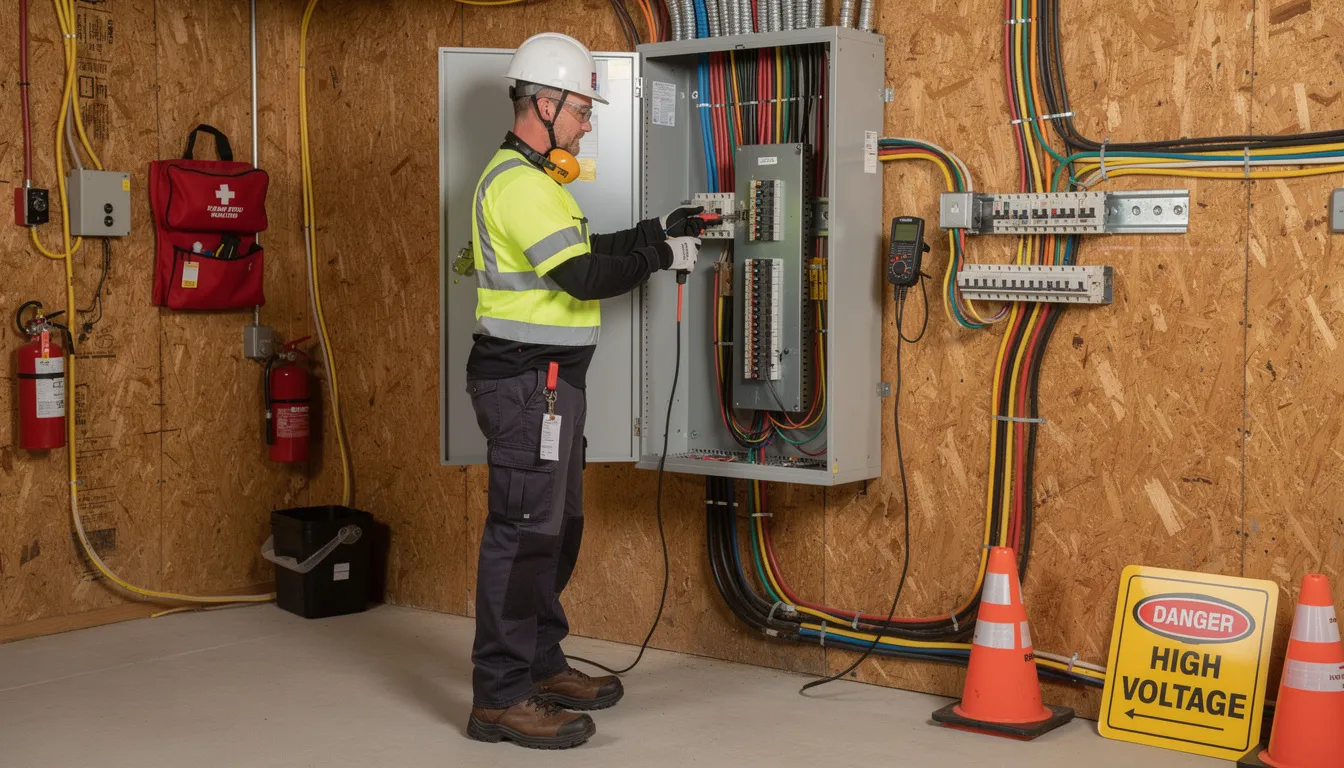
Electrical panel upgrades require professional installation for legal, safety, and practical reasons that make DIY approaches both dangerous and inadvisable:
Legal requirements mandate that licensed electricians perform panel upgrades in most jurisdictions. Electrical permits require professional contractor licenses, and inspections verify code compliance that untrained homeowners cannot ensure.
Safety risks are substantial when working with electrical panels. The National Fire Protection Association reports 46,700 annual house fires from faulty electrical work, often resulting from improper installations that create dangerous conditions.
Code compliance demands extensive knowledge of the National Electrical Code and local amendments. Proper wire sizing, circuit protection, grounding requirements, and utility coordination require professional expertise developed through years of training and experience.
Insurance implications can void homeowner’s coverage for electrical-related claims when unlicensed individuals perform electrical work. Insurance companies may deny fire or damage claims resulting from improper DIY electrical installations.
Complexity factors include calculating electrical load requirements, sizing conductors properly, coordinating with the utility company for service disconnection, and ensuring all branch circuit connections meet safety standards.
Professional electricians also carry liability insurance, provide warranties on their electrical work, and understand local inspection requirements that ensure your new panel meets all safety and legal standards.
How to Save Money on Electrical Panel Upgrades
While electrical panel upgrades represent a significant investment, several strategies can help reduce your total project cost without compromising safety or quality:
Obtain multiple quotes from licensed electricians to compare pricing and scope of work. Prices can vary widely depending on contractor overhead, scheduling availability, and approach to the project. Three to four quotes typically provide a good range for comparison.
Schedule upgrades during off-peak seasons when electrician availability is higher and demand is lower. Winter months often offer better pricing and faster scheduling than spring and summer renovation seasons.
Combine panel upgrades with other electrical work to reduce overall labor costs. If you’re planning additional electrical installations like new circuits, outlets, or lighting, bundling these projects can save money on mobilization and setup costs.
Choose standard panel models over smart panels unless advanced features are specifically needed. Basic electrical panels provide the same safety and capacity benefits at significantly lower material costs than smart panels with monitoring and load management features.
Maintain existing electrical systems through routine maintenance to avoid emergency replacement situations that command premium pricing. Regular inspections can identify potential issues before they become urgent safety hazards requiring immediate attention.
Research local utility rebates for electrical upgrades or energy efficiency improvements. Some utility companies offer incentives for panel upgrades, especially when combined with heat pump installations or other electrification projects that reduce natural gas consumption.
Planning your upgrade during normal business hours rather than emergency service calls can also significantly reduce labor costs, as emergency electrical work typically costs 50-100% more than scheduled installations.
FAQ
How long does an electrical panel upgrade take? Standard panel upgrades typically require 4-8 hours of work, though complex installations involving rewiring or panel relocation can take 1-2 days to complete. The timeline includes coordination with your utility company for power disconnection and restoration, which usually happens the same day for straightforward replacements.
Do I need permits for electrical panel upgrades? Yes, electrical panel upgrades require permits in most jurisdictions, and work must be performed by licensed electricians who can obtain permits and arrange required inspections. Permit costs typically range from $50-$300 and ensure your upgrade meets local electrical codes and safety standards.
Will upgrading my electrical panel increase home value? Panel upgrades can increase home value by $1,000-$3,000 by improving safety, supporting modern appliances, and meeting buyer expectations for updated electrical systems. More importantly, upgraded panels eliminate potential deal-breakers during home inspections and provide peace of mind for future homeowners.
Can I upgrade just part of my electrical panel? Partial upgrades like replacing the main breaker ($200-$300) or adding a subpanel ($400-$1,750) are possible, but full panel replacement is often more cost-effective for aging systems. When the existing panel shows signs of wear or cannot support your electrical needs, complete replacement provides better long-term value.
How do I know what size electrical panel I need? Calculate your home’s electrical load by totaling appliance amperage requirements, then add a 25% safety margin. Most modern homes need 200-amp service to support HVAC systems, electric vehicles, and multiple appliances simultaneously. A qualified electrician can perform load calculations to determine the appropriate panel size for your specific electrical needs and future plans.
From panel upgrades to EV charger installs, we handle it all across LA County. Skip the forms—talk to a real expert in seconds. Dial +1 (424) 238-3889 to book your service today.